
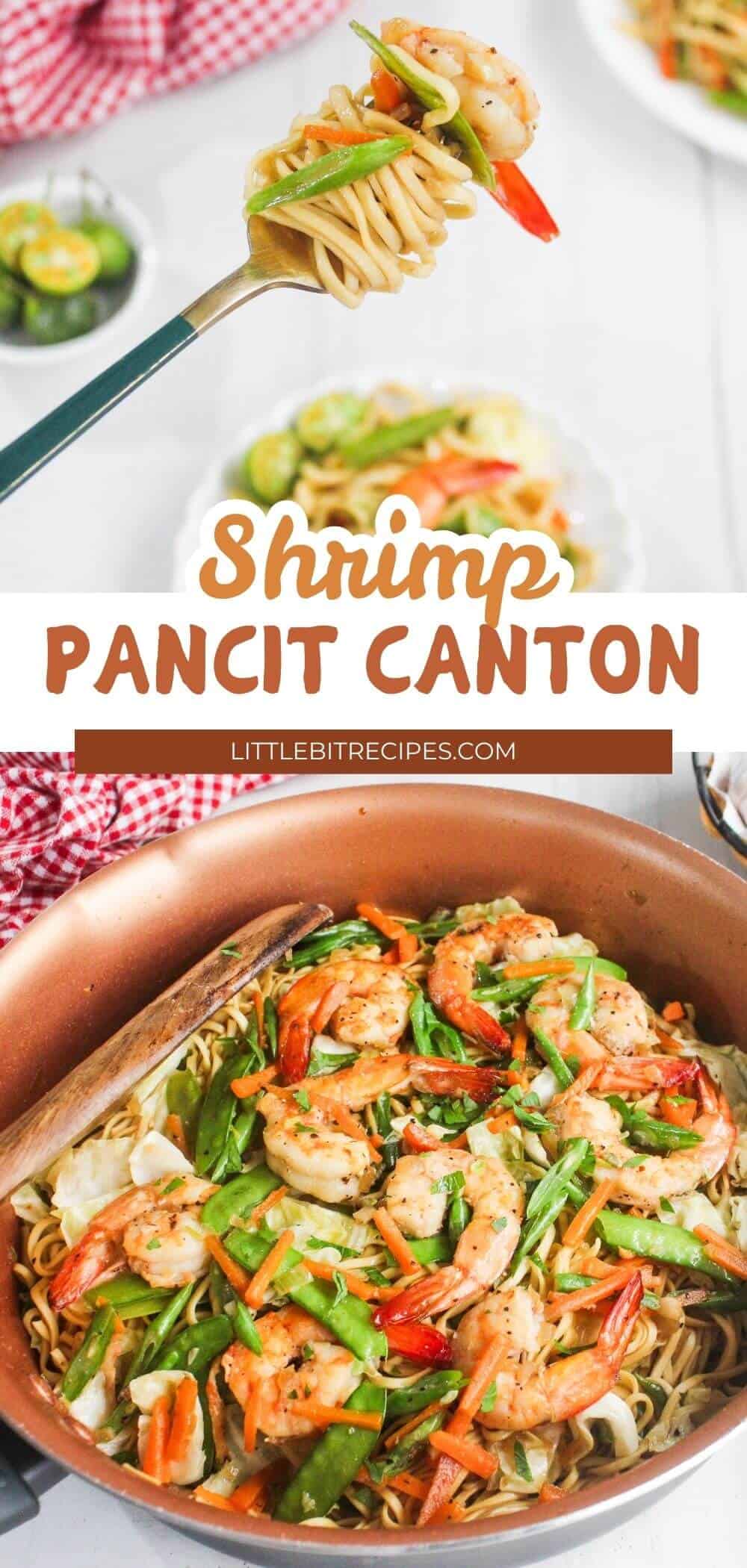
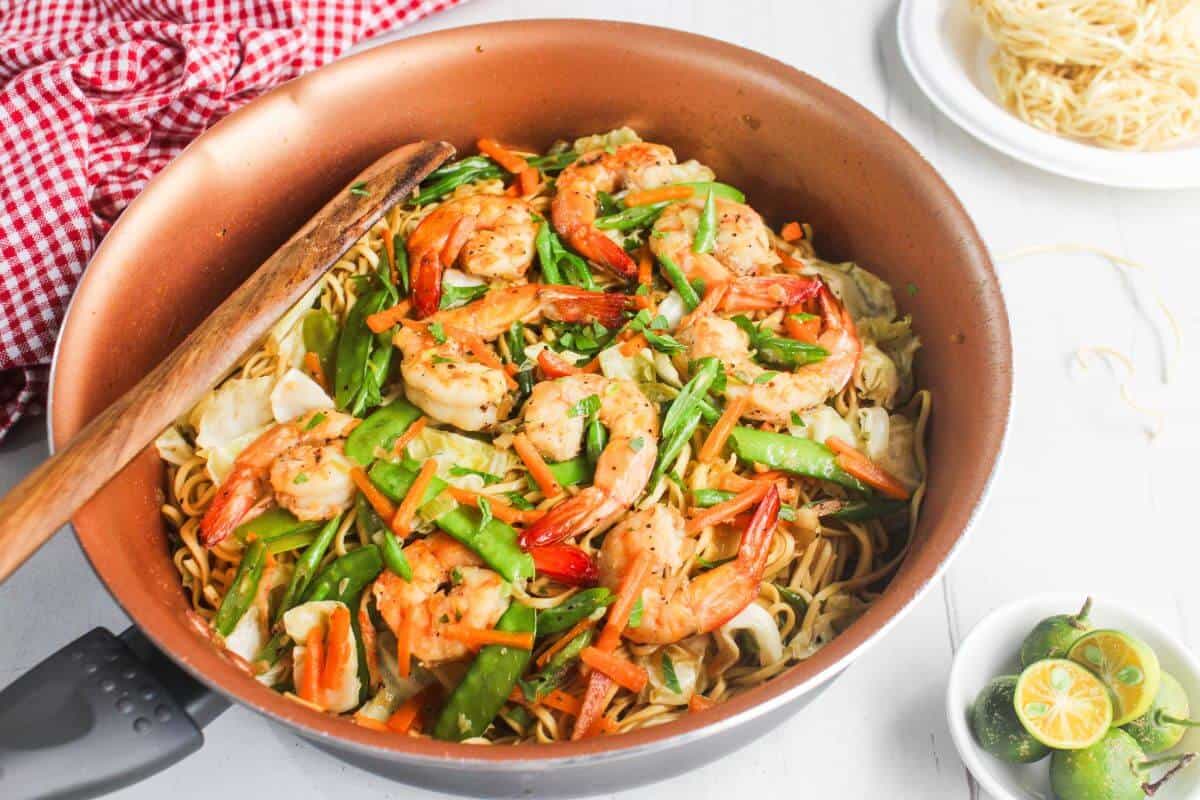
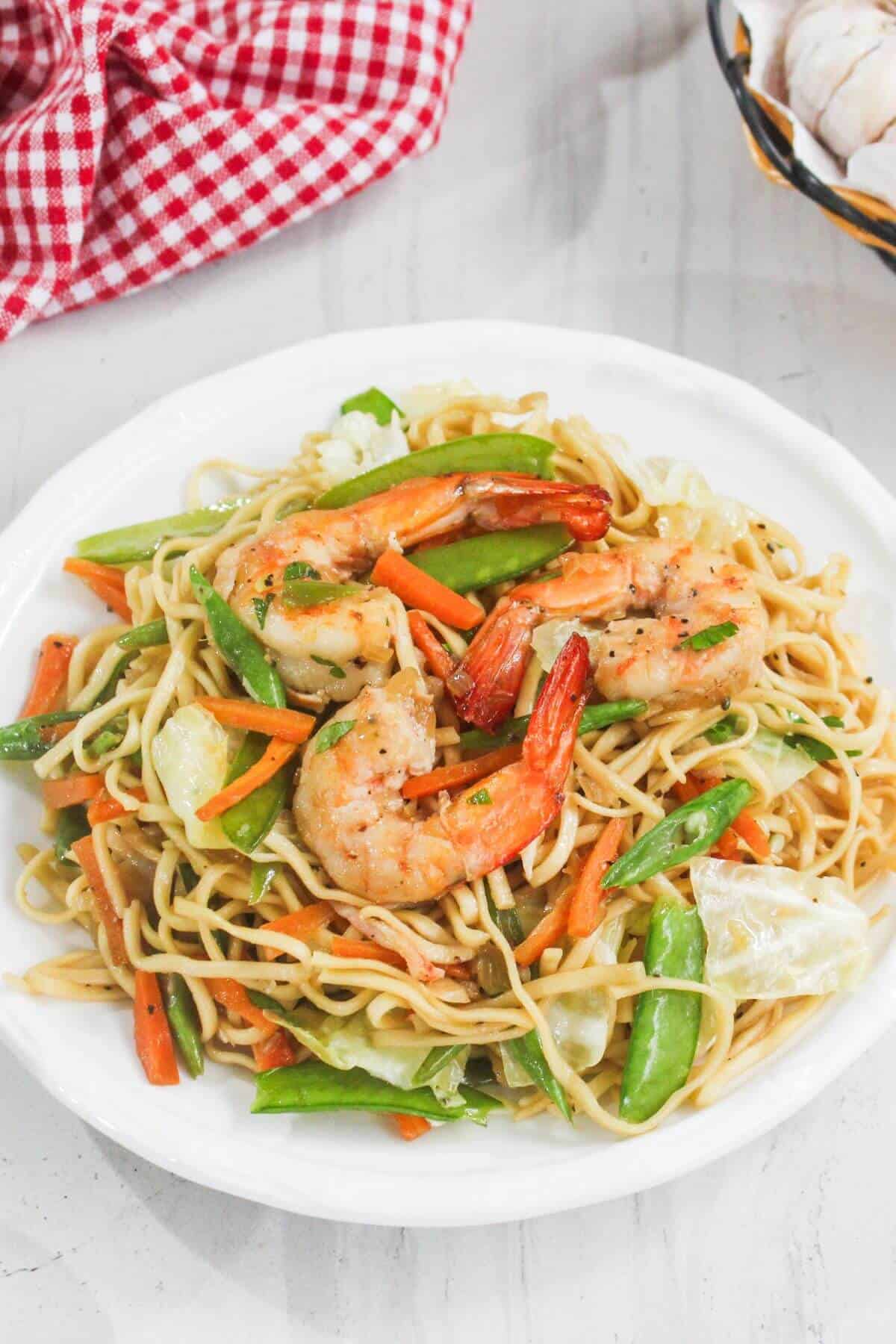
This shrimp pancit canton recipe features tender shrimp, crisp vegetables, and savory noodles simmered in rich homemade broth. Finished with kinchay and calamansi, it's comforting, flavorful, and made for sharing.
Want to save this post?
Enter your email below and get it sent straight to your inbox. Plus, I'll send you the latest recipes and tips every week!
Table of Contents
Pancit is a Filipino noodle dish I turn to when I want something deeply satisfying without making an all-day project out of cooking. It's hearty, full of flavor, and always feels a little special, even on an ordinary weeknight. Every time I make it, the aroma alone reminds me why this recipe has stayed in my rotation for years.
This dish brings together tender shrimp, crisp vegetables, and noodles that soak up every bit of savory goodness. Just like my pancit bihon guisado, it's perfect for small gatherings, and even those nights when I just need a little comfort food. It's a rich and balanced meal idea that's always a winner with friends and family.
Ingredients
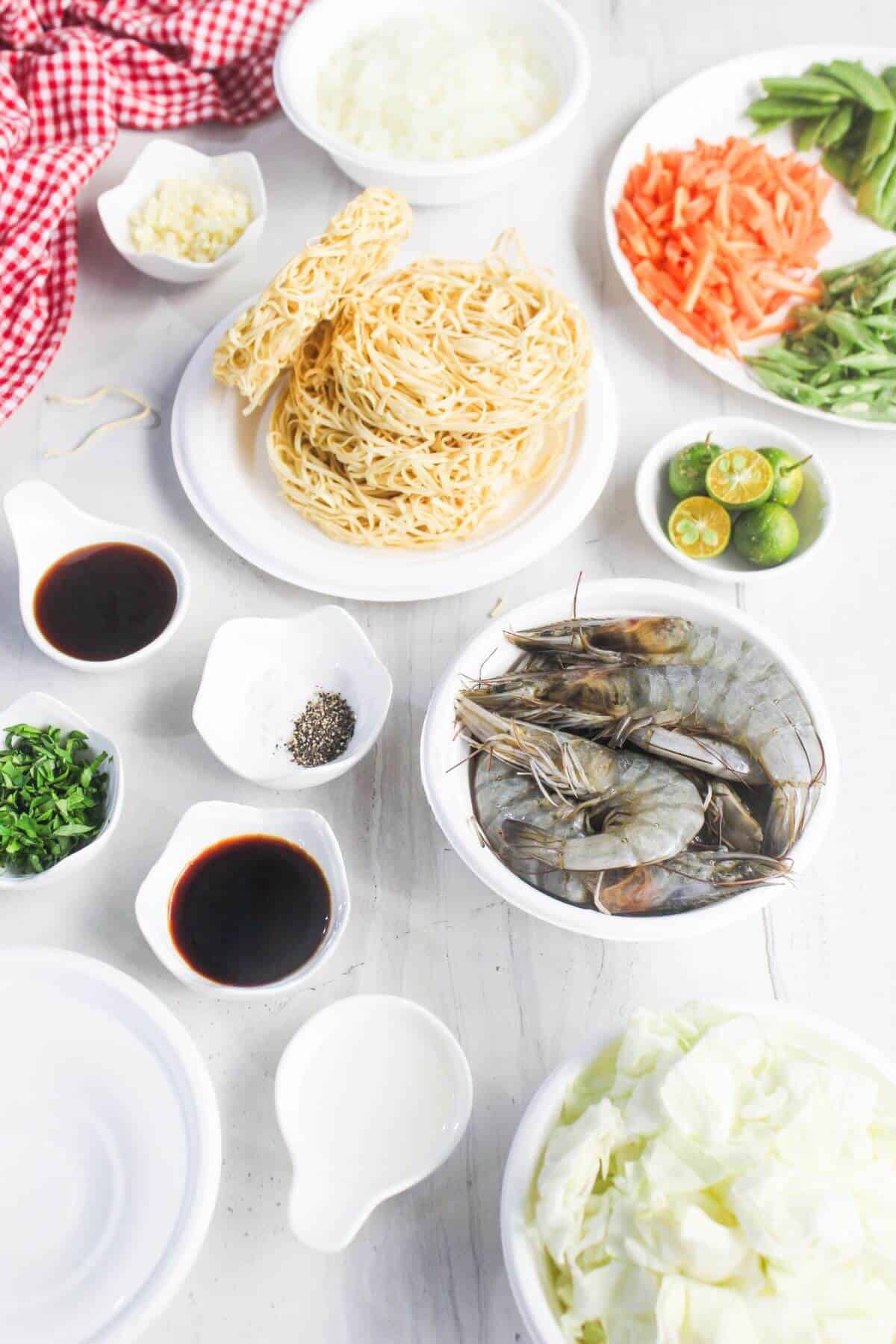
- Large shrimp (shell and head intact) - Using whole shrimp gives you sweeter, juicier meat while the shells and heads add deep seafood flavor to the dish.
- Homemade shrimp broth - This broth builds a rich, savory base that infuses the dish with concentrated shrimp flavor.
- Refined coconut oil - It provides a clean, high-heat cooking fat that lets the aromatics and shrimp cook evenly without overpowering the dish.
- Onion - Onions add natural sweetness and depth that balance the savory sauces and seafood.
- Garlic - Garlic brings aromatic warmth and enhances the overall umami of the dish.
- Snow peas - Snow peas add fresh crunch and a light sweetness that keeps the dish from feeling heavy.
- Carrots - Carrots contribute color, mild sweetness, and texture that complement the savory shrimp and noodles.
- Green beans - Green beans add crispness and structure, helping balance the soft noodles and tender shrimp.
- Soy sauce - Soy sauce delivers saltiness and umami that season both the dish evenly.
- Oyster sauce - Oyster sauce adds depth, slight sweetness, and a rich savory finish that ties everything together.
- Kosher salt - Salt fine-tunes the seasoning and enhances the natural flavors of the shrimp and vegetables.
- Ground black pepper - Black pepper adds gentle heat and complexity without overpowering the dish.
- Pancit canton - These noodles absorb the shrimp broth and sauces, becoming the hearty backbone of the dish.
- Cabbage - Cabbage softens as it cooks, adding volume and mild sweetness while soaking up flavor.
- Kinchay (Chinese celery) - Kinchay adds a fresh, slightly peppery note that brightens the finished dish.
- Fresh calamansi - Calamansi provides acidity that cuts through richness and lifts all the savory flavors.
Homemade Shrimp Broth Ingredients
- Shrimp shells and heads - These are simmered to extract maximum seafood flavor for a deeply savory broth.
- Water - Water serves as the base that carries and concentrates the shrimp flavors.
- Soy sauce - Soy sauce enhances umami and lightly seasons the broth.
- Kosher salt - Salt balances and sharpens the natural shrimp taste in the broth.
- Ground black pepper - Black pepper adds subtle warmth and depth to the broth.
Scroll down to the recipe card for quantities used.
Instructions
Remove the head and shell of each shrimp, then place them in a deep pan.

Add salt, black pepper, soy sauce, and water. Bring to a boil for 30 seconds. Turn down the heat to 140°F (60°C), stir, and simmer for 5 minutes, and skim the foam.
While the head and shrimp are simmering, pat dry, devein, and season the peeled shrimp, then marinate for at least 15 minutes.

Turn off the heat after 5 minutes and steep the shells and heads for a few minutes, then strain. Reserve the shrimp broth and discard the shells and heads.
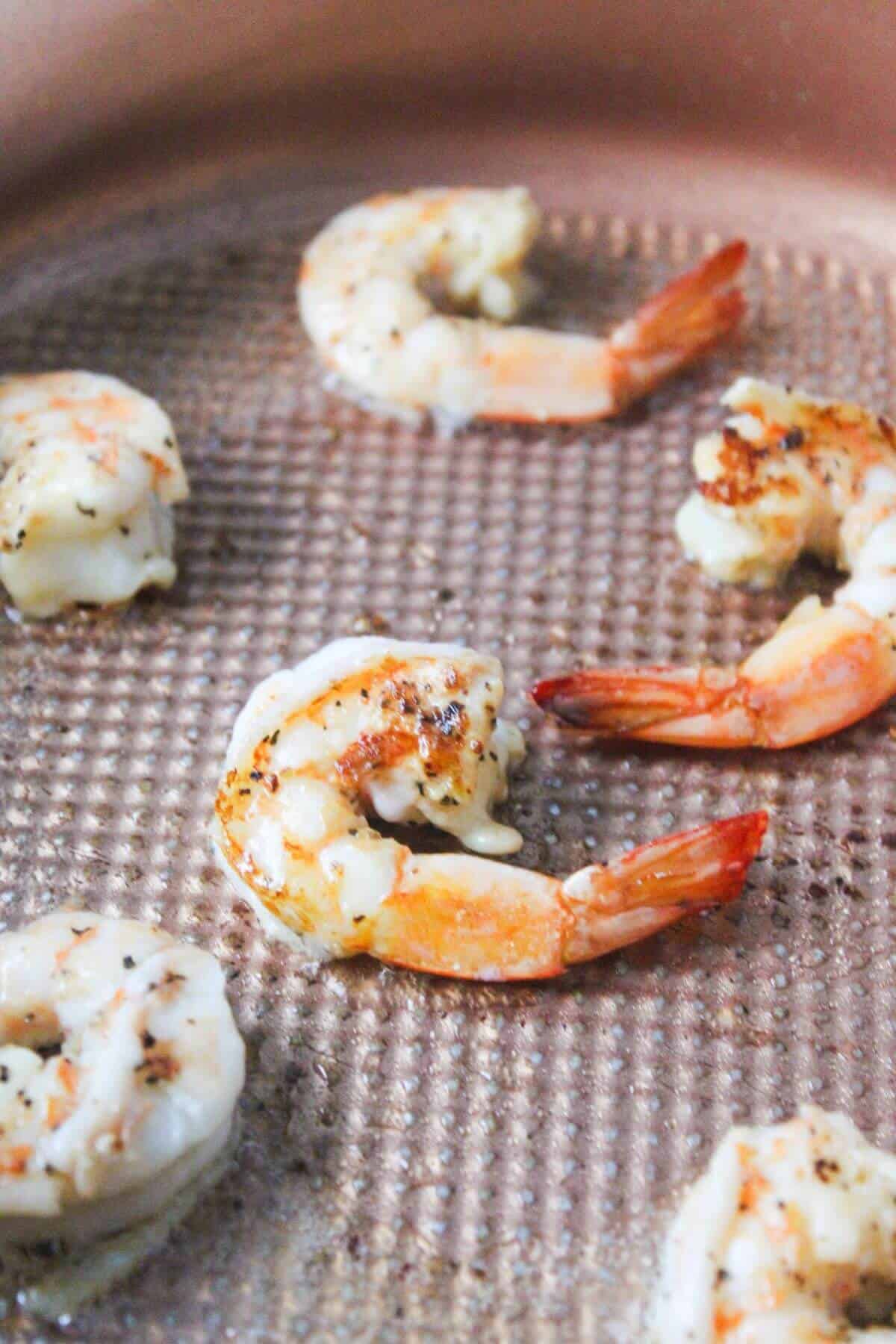
In a deep, heated pan (or wok) with oil but not smoking, add seasoned shrimp and lightly cook half a batch of shrimp for 1 minute on each side. Immediately transfer to a paper-lined plate and cook the remaining batch of shrimp.
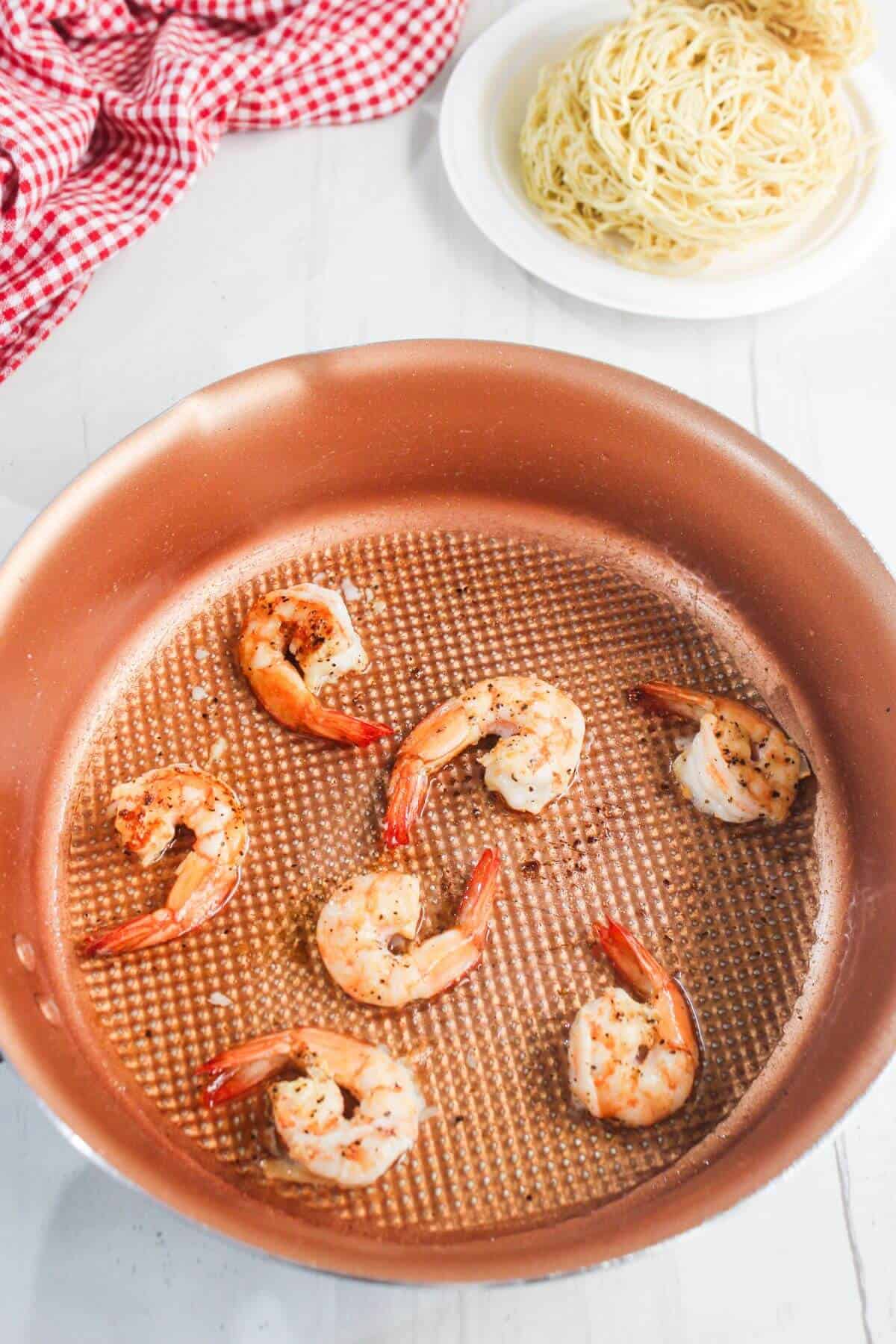
In the same deep pan, saute the onions for 2 minutes over low heat, then add garlic. Continue to sauté until the garlic is fragrant and the onions are soft and translucent.
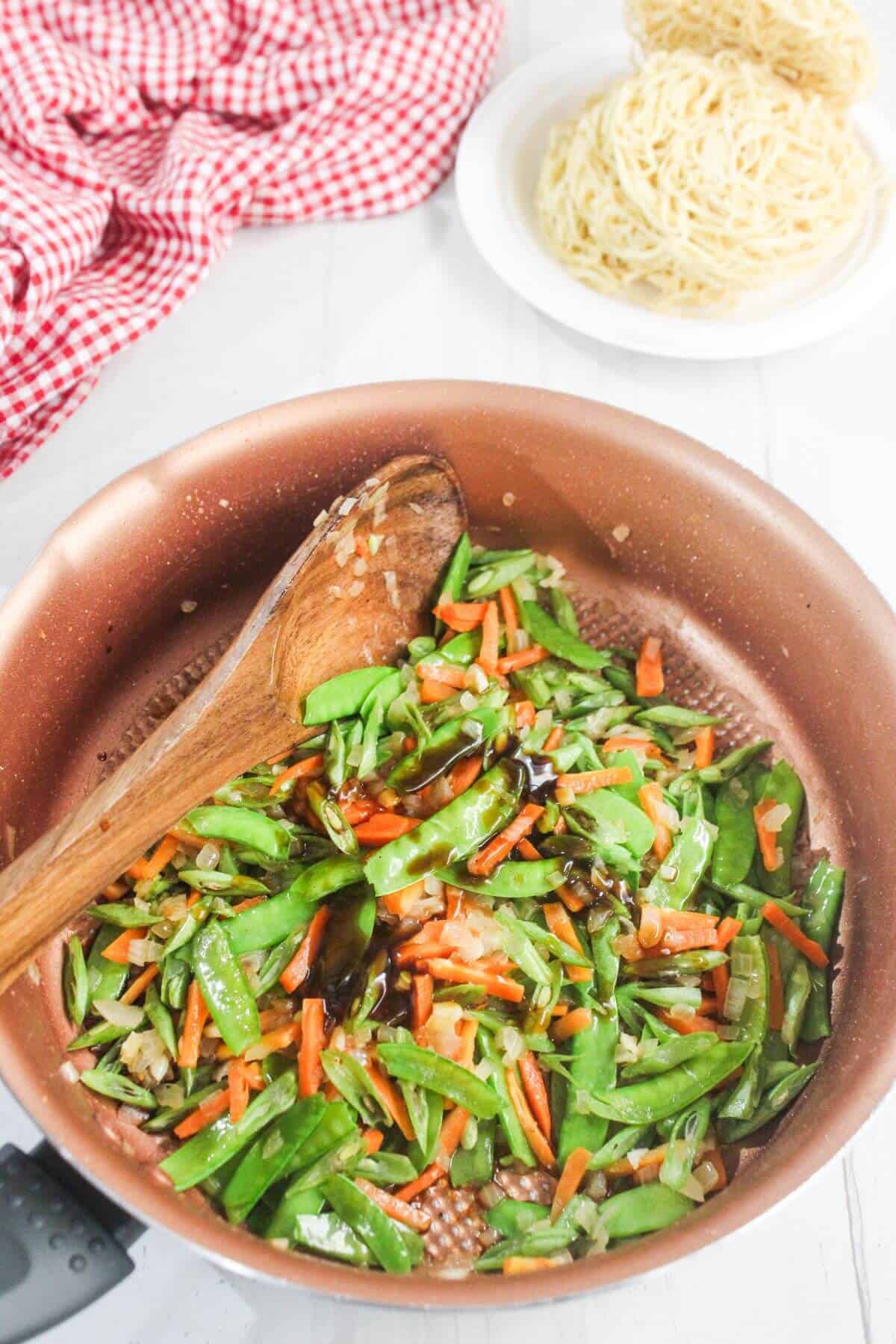
Add the carrots and chicharo, then sauté for 1 minute.
Add green beans, soy sauce, oyster sauce, salt, and black pepper, then sauté for 30 seconds.

Add the slightly cooked shrimp and gently mix with the vegetables for 1 to 2 minutes until the vegetables are crisp-tender and the shrimp are not overcooked. Transfer the shrimp and vegetable mixture to a plate.
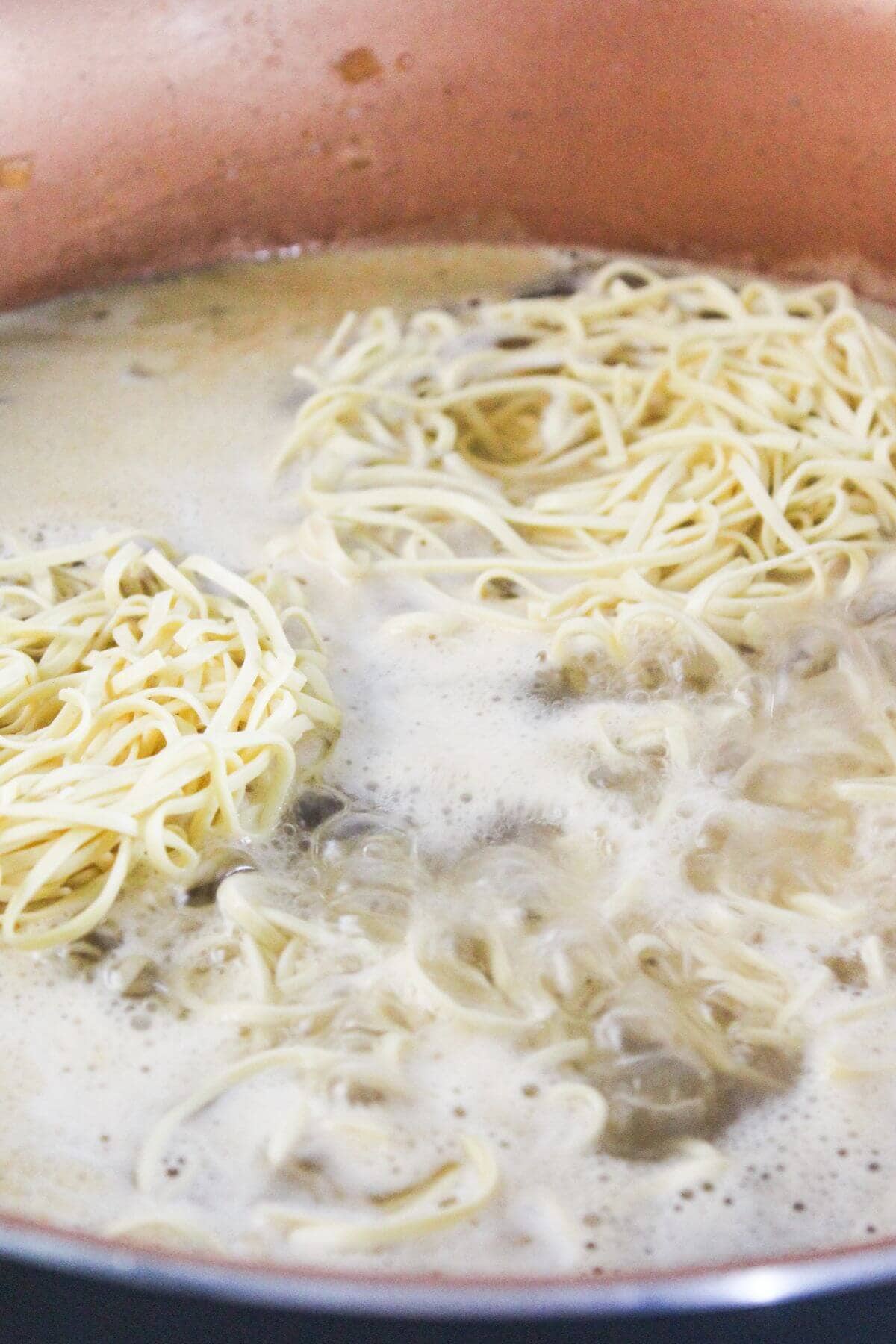
In the same deep pan, pour the homemade shrimp broth and bring to a boil. Add the pancit canton and toss regularly as the noodles loosen. Pour soy sauce and oyster sauce, then simmer for 3 minutes, while gently tossing the noodles.
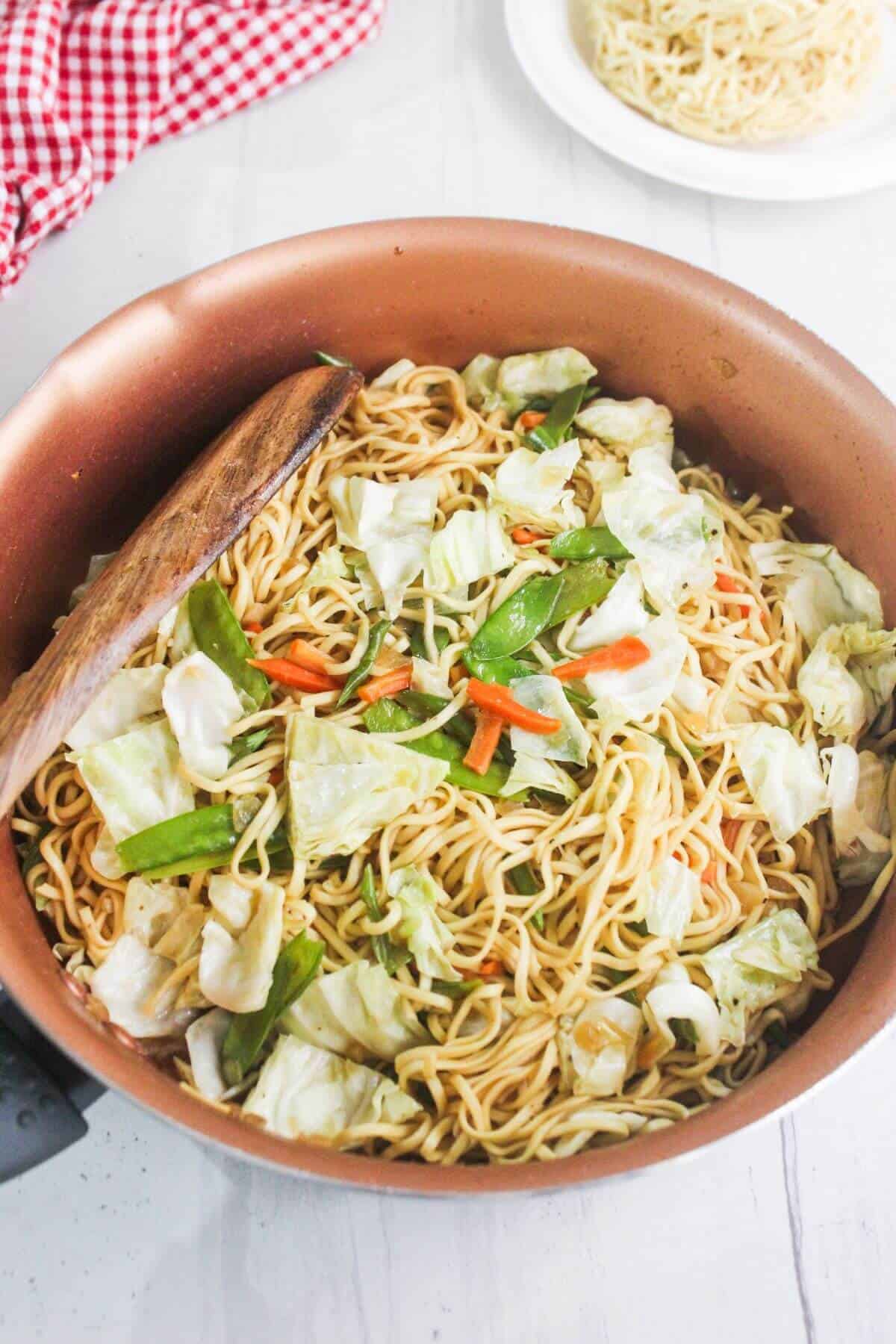
Season with salt and black pepper, add more water if needed, and continue tossing. Once the noodles are slightly tender, add the shrimp and vegetable mixture. Continue to toss until the noodles are tender while the shrimp and vegetables are heated through.

Top with kinchay and serve immediately. Alternatively, transfer to a platter, sprinkle kinchay, and serve.
Cut calamansi in half and serve on the side.
Hint: Avoid overcooking the shrimp-cook them just until lightly opaque, then add them back at the end so they stay tender and juicy instead of rubbery.
Variations
Here are some easy, low-effort ways to customize this recipe so it works for different tastes, diets, and dinner guests:
- Swap the protein - Replace shrimp with chicken, pork, tofu, or a mix of seafood to suit preferences or dietary needs.
- Add more vegetables - Include bell peppers, mushrooms, bok choy, or bean sprouts to bulk it up, or use what's already in the fridge.
- Adjust the sauce balance - Add a splash of fish sauce for a deeper savory flavor or a pinch of sugar if your guests prefer a slightly sweeter noodle dish.
- Make it spicier - Stir in chili garlic sauce, fresh chilies, or chili oil to add heat without changing the base recipe.
- Customize for cultural tastes - Use hoisin sauce and chow mein for a more Chinese-style or add patis (Filipino fish sauce) for a more traditional Filipino profile.
- Change the noodles - Substitute egg noodles, rice noodles, or whole wheat noodles depending on availability or preference.
- Finish with fresh toppings - Top with green onions, extra kinchay, fried garlic, or crispy shallots to add texture and aroma.
Tips
Top tip: Prep and portion all ingredients before turning on the stove. Since this dish cooks quickly, timing is key to keeping the noodles, vegetables, and shrimp perfectly cooked.
More Helpful Cooking Tips:
- Keep the heat at medium when sautéing vegetables to prevent burning while preserving their crunch.
- Toss the noodles gently and frequently so they absorb the liquid evenly without breaking.
- Add liquid gradually to avoid soggy noodles and maintain the proper texture.
- Taste and adjust seasoning at the very end, as the sauces reduce and intensify while cooking.
- Use a wide, deep pan to ensure even cooking and prevent overcrowding.
- Finish with fresh calamansi just before serving to keep the flavor bright and balanced.
Serving suggestions
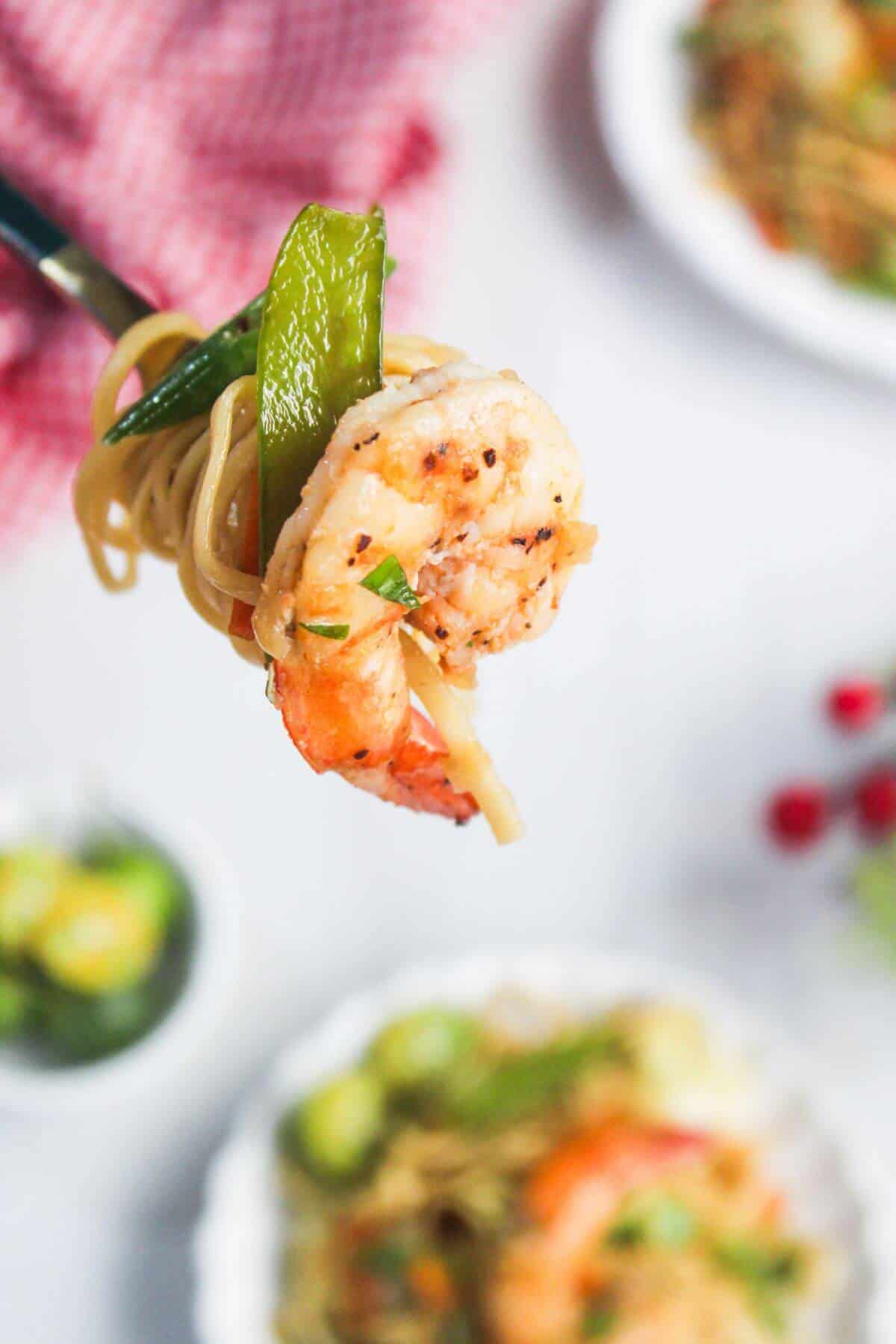
This recipe is best served fresh and hot, straight from the pan, when the noodles are tender, and the shrimp are juicy. I like to bring it to the table family-style on a large platter, topped with extra kinchay and calamansi halves so everyone can adjust the flavor to their liking. It works well as a main dish for lunch or dinner, especially when you want something filling but not heavy.
For those without a diet restriction, this dish is best served with other Filipino favorites, like lumpiang Shanghai and lechon kawali with a side of puto and pandesal. I also like to include leche flan and fruit salad to finish things off. I've found that this combination works especially well for gatherings, potlucks, or weekend family meals.
If you're serving guests or celebrating a special occasion, you can turn this into part of a larger spread. Pair it with spaghetti with sweet meat sauce to create a familiar and comforting menu that appeals to both kids and adults. This pairing is something I've served many times at parties, and it always encourages seconds and happy plates.
Storage
Store any leftovers in an airtight container in the refrigerator once the dish has fully cooled. It will keep well for up to three days, though the noodles will continue to absorb moisture as they sit. For best results, store calamansi and fresh garnishes separately and add them only after reheating.
To reheat, warm the noodles gently in a pan over medium-low heat with a splash of water to loosen them and prevent drying out. Stir occasionally until heated through, being careful not to overcook the shrimp. You can also reheat in the microwave in short intervals, stirring between each, but stovetop reheating gives the best texture.
FAQs
Yes, frozen shrimp work well as long as they are fully thawed, patted dry, and properly seasoned before cooking. Choose raw shrimp rather than pre-cooked to avoid a rubbery texture.
You can substitute egg noodles, lo mein noodles, or even thin wheat noodles with a similar thickness. Cooking times may vary slightly, so keep an eye on the texture as they soften.
Cook the shrimp briefly at the start, remove them from the pan, and add them back only at the end to heat through. This method keeps them tender and prevents them from turning tough.
Have a question about this recipe?
Ask AI to answer based on this specific recipe:
Follow us on Facebook, Instagram, and Pinterest to see more recipes.
Recipe
Filipino Shrimp Pancit Canton
Ingredients
- 1 pound large shrimp 18 pieces, shell and head intact
- Homemade shrimp broth see below
- 3 tablespoons refined coconut oil
- 1 large onion 1 cup, finely chopped
- 3 cloves garlic minced
- 80 grams snow peas tips and string removed
- 110 grams carrots 1 heaping cup, cut into strips
- 100 grams green beans ¾ cup, tips and strings removed, thin bias cut
- 3 tablespoons soy sauce
- 2 tablespoons oyster sauce
- ½ teaspoon kosher salt add more to taste
- ½ teaspoon ground black pepper add more to taste
- 200 grams pancit canton
- 200 grams cabbage 2 heaping cups
- 1 teaspoon kinchay (Chinese celery) or regular clery diced
- 10 to 12 pieces fresh calamansi or lemon
HOMEMADE SHRIMP BROTH:
- shells and heads from the whole shrimp
- 2 ½ cups water or more if needed
- ½ tablespoon soy sauce
- kosher salt
- ground black pepper
Instructions
- Remove the head and shell of each shrimp, then place on a deep pan. Add salt, black pepper, soy sauce, and water then bring to a boil at 536°F (280°C) for 30 seconds. Turn down the heat to 140°F (60°C), stir, and simmer for 5 minutes and skim the foam.
- Turn off the heat after 5 minutes and steep the shells and heads for a few minutes, then strain. Reserve the shrimp broth and discard the shells and heads.
- While the head and shrimp are simmering, pat dry, devein, and season the peeled shrimp, then marinate for at least 15 minutes.
- In a deep heated pan with oil but not smoking, add seasoned shrimp and lightly cook half a batch of shrimp for 1 minute on each side. Immediately transfer to a paper-lined plate and cook the remaining batch of shrimp.
- In the same deep pan, sauté the onions for 2 minutes over low heat, then add garlic. Continue to sauté until the garlic is fragrant and onions are soft and translucent.
- Add the carrots and chicharo, then sauté for 1 minute.
- Add green beans, soy sauce, oyster sauce, salt, and black pepper, then sauté for 30 seconds. Add the slightly cooked shrimp and gently mix with the vegetables for 1 to 2 minutes until the vegetables are crisp tender and the shrimp are not overcooked. Transfer the shrimp vegetable mixture to a plate.
- In the same deep pan, pour the homemade shrimp broth and bring to a boil. Add the pancit canton and toss regularly as the noodles loosen. Pour soy sauce and oyster sauce, then simmer pancit canton for 3 minutes, while gently tossing the noodles.
- Season with salt and black, add more water if needed, and continue tossing the noodles. Once the noodles are slightly tender add the shrimp and vegetable mixture. Continue to toss until the noodles are tender while the shrimp and vegetable are heated through. Top with kinchay and serve immediately.
- Alternatively, transfer to a platter, sprinkle kinchay and serve.
- Cut calamansi in half and serve on the side.


Comments
No Comments